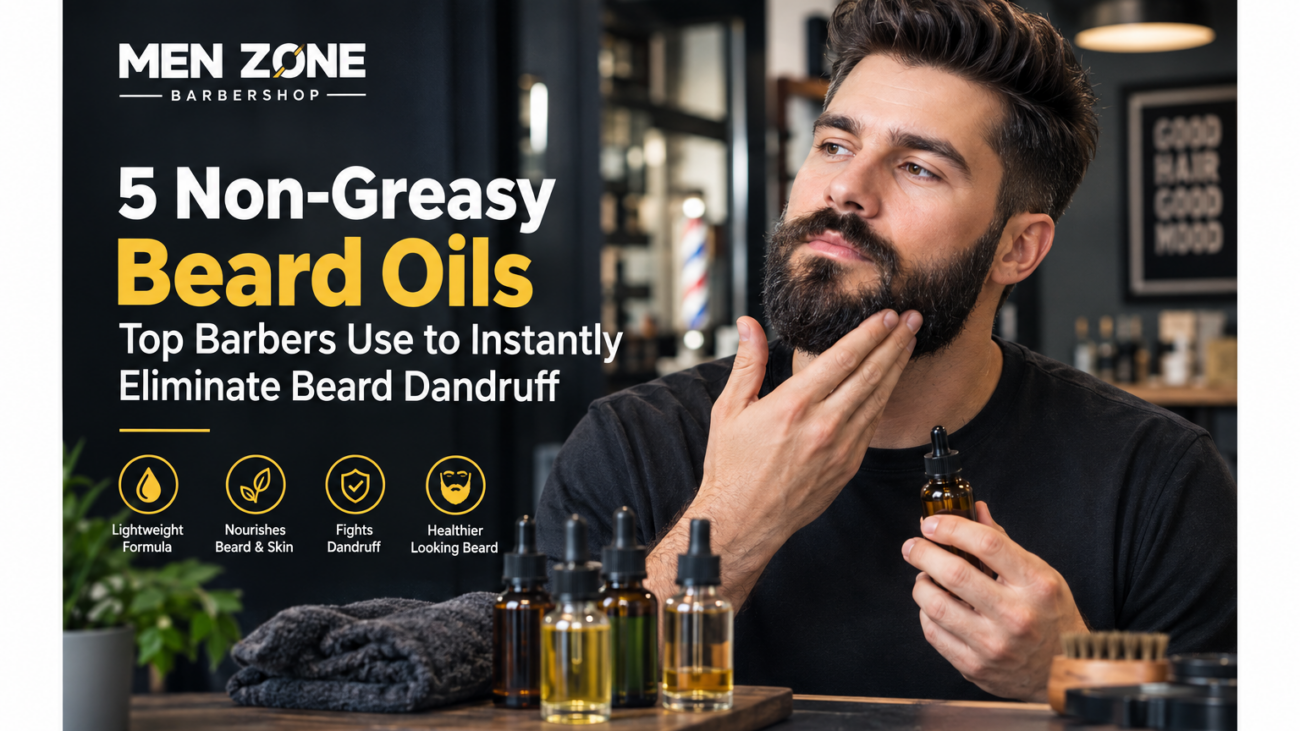
Beard dandruff—often called beardruff—can make an otherwise well-groomed beard look dry, flaky, and untidy. Those small white flakes are usually not caused by the beard hair itself. They often come from the skin underneath, where dryness, irritation, excess oil, or conditions such as seborrheic dermatitis can contribute to scaling.
The right beard oil can help soften the beard and moisturize the skin underneath without leaving a heavy, greasy finish. However, it is important to understand that beard oil does not instantly cure every cause of dandruff. If you have persistent redness, intense itching, greasy scaling, or recurring flakes, a dermatologist may need to determine whether an underlying skin condition is involved.
What Makes a Beard Oil Non-Greasy?
Not every beard oil is created with the same formula. Some products feel heavy because they rely heavily on thick oils or because too much product is applied.
For a lightweight feel, look for formulas containing ingredients such as jojoba oil, argan oil, squalane, or other lightweight emollients. Jojoba is particularly popular in beard care because its composition is similar to natural skin oils, while argan oil is commonly used to condition facial hair without a very heavy finish.
The most important factor is also quantity. Even an excellent lightweight oil can feel greasy when you use six or eight drops on a short beard.
1. Jojoba-Based Beard Oil
If your biggest problem is a beard that feels dry while your face becomes oily easily, a jojoba-based formula is an excellent place to start.
Jojoba oil is lightweight and works well as a conditioning ingredient for both facial hair and the skin underneath. Rather than simply coating the beard, a small amount can help make the beard feel softer and more manageable.
Why barbers like it
A good jojoba-based oil can:
- Reduce the dry feeling beneath the beard
- Make coarse beard hair softer
- Improve beard manageability
- Give the beard a healthier appearance
- Avoid the heavy feeling associated with excessive product
How to use it
After washing your beard, dry it gently and apply only a few drops. Rub the oil between your palms first, then massage it into the skin underneath the beard before distributing the remainder through the hair.
That last step matters. Beard dandruff develops on the skin, so simply coating the beard hair isn’t enough.
2. Argan Oil Beard Blend
Argan oil is another popular choice for men who want conditioning without making their beard look wet or oily.
A lightweight argan-based blend can be particularly useful when your beard hair feels rough, brittle, or difficult to control. It contains fatty acids and vitamin E and is widely used in grooming products for its conditioning properties.
Who should consider it?
Argan-based beard oil may suit you if:
- Your beard feels rough after washing
- The ends become dry
- Your beard looks dull
- You want a softer finish
- You dislike thick beard balms
Use a small amount and increase gradually if necessary. The goal is softness and hydration—not a shiny, wet-looking beard.
3. Squalane-Based Beard Oil
If you strongly dislike the traditional oily sensation of beard products, a squalane-based formula is worth considering.
Squalane is known for its lightweight, silky skin feel. It can provide moisture without the heavier sensation associated with some traditional beard oils.
This can be especially appealing for men who have short-to-medium beards and want their facial hair to look natural rather than coated in product.
A useful application trick
Instead of dropping oil directly onto your beard, put one or two drops into your palm first. Spread it across your hands and fingertips, then massage it into the skin beneath the beard.
If your beard still feels dry after a few minutes, add another small amount.
Start small. You can always add more; removing excess oil is much harder.
4. Lightweight Tea Tree Oil Blend
Tea tree oil is frequently included in grooming products designed for oily or problematic skin because of its antimicrobial properties. However, concentrated essential oils can irritate skin, so a beard product containing properly diluted tea tree oil is preferable to applying undiluted essential oil directly to your face.
If your beard is flaky and itchy, don’t assume tea tree oil alone will solve the problem. Beard dandruff can have different causes, including seborrheic dermatitis, and treatment may require more than an oil. The American Academy of Dermatology notes that beard dandruff can occur alongside itching, scaling, greasy patches, and irritation.
You might also like: The Minimalist 3-Product Routine for an All-Day Matte Hold
The barber’s approach
Think of beard oil as part of your maintenance routine, rather than a medication.
Clean the beard properly, dry it thoroughly, moisturize the skin, and avoid applying excessive product.
5. A Fragrance-Free Lightweight Beard Oil
Sometimes the best beard oil is the simplest one.
If your facial skin is easily irritated, a fragrance-free formula with a short ingredient list may be a smarter choice than a heavily scented beard oil containing numerous essential oils.
Fragrance can be enjoyable, but if your skin is already irritated, adding more potential irritants isn’t necessarily helpful.
For men dealing with recurring flakes, pay attention to how your skin reacts after every product change. If a new oil causes burning, redness, increased itching, or more scaling, stop using it.
How to Apply Beard Oil Without Making Your Beard Greasy
Choosing a lightweight oil is only half the equation. Application technique makes a huge difference.
Step 1: Clean your beard
Wash away sweat, dirt, styling products, and excess oil. Avoid aggressively scrubbing the skin.
Step 2: Dry thoroughly
Pat the beard dry with a clean towel. You don’t want it dripping wet, but slightly damp facial hair can make distribution easier.
Step 3: Start with 1–3 drops
Short beard? Start with one or two.
Medium beard? Try two or three.
Longer beard? You may need more, but increase gradually.
Step 4: Massage the skin first
Use your fingertips to work the oil through the beard and onto the skin beneath it. This is particularly important when dryness is contributing to visible flakes.
Step 5: Comb through the beard
Use a clean beard comb or brush to distribute the remaining product evenly.
Step 6: Stop before it becomes shiny
Your beard should look conditioned—not wet.
Why Beard Dandruff Keeps Coming Back
Many men make the same mistake: they see flakes, add more oil, and assume more moisture will solve everything.
Sometimes it can help. Sometimes it can make the situation more complicated.
Beard dandruff can be associated with seborrheic dermatitis, which can produce flaky skin, itching, redness, and greasy patches.
That’s why your routine should focus on both the beard and the skin underneath it.
Regular gentle cleansing, thorough rinsing, careful drying, and appropriate moisturizing are more useful than repeatedly pouring oil onto a flaky beard.
If the problem persists despite a consistent routine, consider speaking with a dermatologist rather than continuously switching between beard oils.
Don’t Forget Your Beard During a Haircut
A sharp haircut can make a beard look significantly better, but the connection works both ways. Your beard shape, neckline, cheek line, and haircut should complement each other.
When searching for a Barber Near Me, don’t look only at haircut photos. Consider whether the barber also understands beard shaping and men’s grooming. A professional can help you determine whether your beard needs a simple cleanup, a reshaping, or a different maintenance routine.
For men searching for a Barber Stoney Creek, local convenience can also make regular grooming easier. Consistent beard maintenance is generally much easier when you have a trusted barber who understands your preferred style.
At Men Zone, beard grooming is part of the wider men’s grooming experience, alongside services such as precision haircuts, fades, beard sculpting, and hot towel shaves.
A Local Option for Beard and Hair Grooming
If you’re looking for a Haircut Stoney Creek while also maintaining your beard, choosing one place for both services can make your routine simpler.
Men Zone Barbershop is located at 1334 S Service Rd Bldg G2, Unit#1, Stoney Creek, ON L8E 5C5, Canada, directly off the QEW. The location offers men’s haircuts, fades, beard grooming, hot towel shaves, and other grooming services.
A good barber can also help identify practical grooming mistakes—such as overusing oil, neglecting the skin underneath the beard, or choosing a beard shape that doesn’t complement your haircut.
The 5 Best Beard Oil Types at a Glance
| Beard Oil Type | Best For | Feel |
|---|---|---|
| Jojoba-based | Dry skin + everyday conditioning | Lightweight |
| Argan-based | Rough or coarse beard hair | Smooth |
| Squalane-based | Men who dislike oily products | Very lightweight |
| Diluted tea tree blend | Oily/flaky-feeling skin | Light |
| Fragrance-free blend | Sensitive or easily irritated skin | Clean & simple |
Remember: the ingredient list matters more than the marketing label. “Premium,” “natural,” or “barber quality” doesn’t automatically mean a product will work for your skin.
7-Day Beard Dandruff Maintenance Routine
Day 1–2: Reset
Clean your beard gently and remove accumulated styling products. Don’t aggressively scratch or pick at flakes.
Day 3–4: Moisturize
Introduce a small amount of lightweight beard oil after cleansing. Focus on the skin underneath the beard.
Day 5: Check Your Skin
Look for changes in dryness, itching, redness, and flaking.
Day 6: Reduce Product if Necessary
If your beard looks greasy or your skin feels congested, you’re probably using too much. Reduce the amount.
Day 7: Evaluate
If the beard looks healthier and the skin feels comfortable, maintain the routine. If persistent scaling, redness, itching, or greasy patches remain, consider professional medical advice.
Frequently Asked Questions
1. Can beard oil completely eliminate beard dandruff?
Not necessarily. Beard oil can help moisturize dry skin and condition facial hair, but dandruff can have several causes. Seborrheic dermatitis, for example, may require specific treatment rather than beard oil alone.
2. How many drops of beard oil should I use?
Start with 1–3 drops, depending on beard length and density. Add more only when necessary. Too much oil can make your beard look greasy and may contribute to product buildup.
3. Should beard oil go on the beard or the skin?
Both, but the skin underneath deserves particular attention. Beard dandruff comes from the skin, so distributing a small amount beneath the beard is more useful than simply coating the hair.
4. Can I use beard oil every day?
Many men can use a lightweight beard oil daily, particularly when their skin and beard are dry. However, frequency should depend on how your skin responds. If you experience increased irritation, greasiness, or breakouts, reduce use or reconsider the formula.
5. Is tea tree oil good for beard dandruff?
Tea tree oil is used in some grooming products, but concentrated tea tree essential oil should not be applied directly to the face. Choose a properly formulated and diluted product, especially if your skin is sensitive.
6. Why does my beard still have flakes after using oil?
The flakes may not simply be caused by dryness. Seborrheic dermatitis and other skin conditions can cause persistent beard scaling. If the problem continues, especially with redness or significant itching, consult a dermatologist.
7. Can a barber help with beard dandruff?
A barber can help with beard length, shaping, cleansing habits, product selection, and general grooming technique. However, persistent skin irritation or suspected dermatitis should be evaluated by a qualified healthcare professional.
8. Should I use beard balm instead of beard oil?
It depends on your goal. Beard balm generally provides more hold and styling control, while beard oil is primarily used for conditioning. If dandruff and dryness are your main concerns, a lightweight oil may be more comfortable.
Final Thoughts
The best beard oil isn’t necessarily the richest or most expensive formula. For most men, the better approach is to choose a lightweight product, use a small amount, massage it into the skin beneath the beard, and maintain a consistent cleansing routine.
Jojoba, argan, squalane, properly diluted tea tree blends, and simple fragrance-free formulas are all options worth considering. But remember that persistent beard dandruff may be a skin condition rather than simple dryness.
And if you’re due for both beard maintenance and a fresh cut, combining the two can make your entire grooming routine easier. Men Zone Barbershop provides haircut and beard-grooming services at its Stoney Creek location, making it a convenient option for men who want their haircut and beard to work together as one finished style.
Healthy-looking facial hair starts underneath the beard—so take care of the skin, use less product, and keep your grooming routine consistent.